

Origins & Types
What Is a Kilim?
Kilims are flatwoven rugs without a knotted pile. Here is what makes them distinct, where they come from, and how to use them at home.
April 8, 2026 · 4 min read · Palmyra Oriental
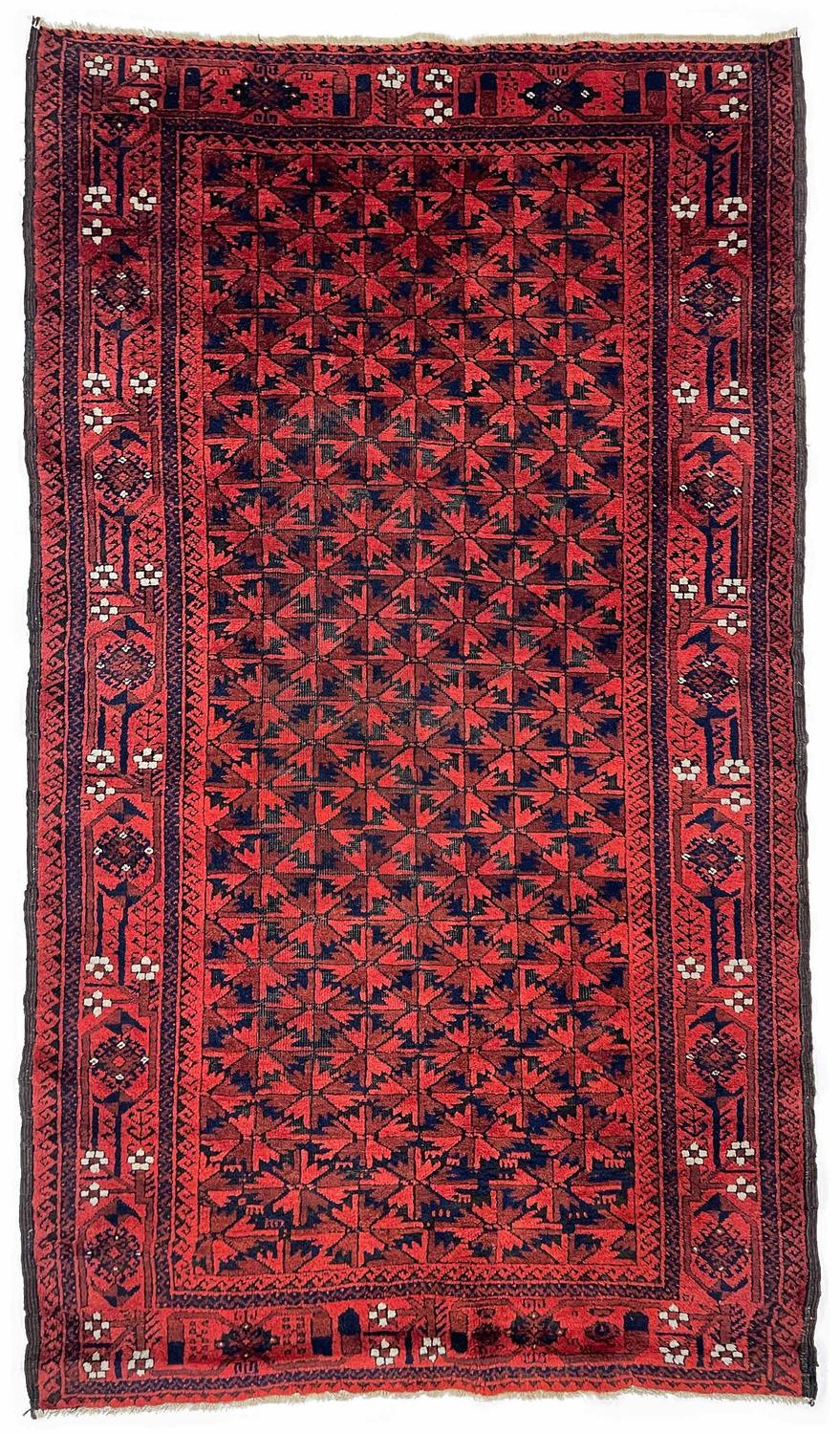
A kilim is a flatwoven rug. Unlike a knotted carpet, which has a raised pile, a kilim is woven so that the warp and weft threads themselves form the surface and the pattern. The result is thinner, lighter, and reversible, with a flat, tapestry-like face.
How a kilim is made
In flatweaving, the weft threads are passed over and under the warp and packed down tightly, so the pile is essentially absent. Colours are built up in blocks, which is why kilim designs tend to be geometric: diamonds, hooks, bands, and stepped motifs, rather than the flowing florals you see in finer knotted city rugs.
Where two colour blocks meet along a vertical line, weavers often leave a small slit — the “slit-weave” technique — which gives many kilims their crisp, graphic edges.
Where kilims come from
Flatweaving is found across a wide region: Anatolia in Turkey, Persia, the Caucasus, and Central Asia, among others. Each area has its own motifs and palette, and names can refer to a place, a people, or a design tradition. As with knotted rugs, the same name is sometimes used loosely, so it is worth asking what a particular term means for a given piece.
Living with a kilim
Because they are flat and relatively light, kilims are versatile:
- On the floor as a rug, especially in lower-traffic rooms or layered over a larger natural-fibre rug
- As a wall hanging, where their graphic patterns read like textile art
- Over furniture, or made into cushion covers from worn sections
They are easy to move, roll, and ship, which makes them a popular first handmade piece for many of our customers.
Kilim, soumak, and pile rugs
It helps to know the family. A pile rug is knotted and has a soft, raised surface. A kilim is a flatweave with no pile. A soumak is another flatweave technique that wraps the weft to create a slightly raised, embroidered-looking surface and a sturdier feel. All three are handmade; they simply use different structures.
If you are drawn to bold, geometric pattern and a lighter piece, a kilim is a natural place to start. Browse the kilims and flatweaves currently in the gallery, or if you’re still deciding between styles, see how to choose a handmade rug.
Personal Selection
Looking for a piece like this?
Tell us your room size, colors, and budget, and we'll prepare a small selection from the gallery.
Request a SelectionKeep reading
More from the Journal
Persian vs Turkish Rugs: What's the Difference?
Persian and Turkish rugs differ in knots, designs, colors, and feel. Here is how to tell them apart and choose the right one for your home.
Read Istanbul & StoriesBuying a Handmade Rug in Istanbul
Istanbul has long been a meeting point for rugs from across the East. Here is how to buy well here — in person or from abroad.
Read CareCaring for a Handmade Rug
Simple, gentle habits that keep a handmade rug beautiful for decades: vacuuming, rotating, sunlight, spills, and storage.
Read