

Buying Advice
How to Choose a Handmade Rug for Your Home
A practical guide to choosing a handmade rug by size, origin, material, color, age, and condition — so the piece fits both your space and the way you live.
May 28, 2026 · 6 min read · Palmyra Oriental
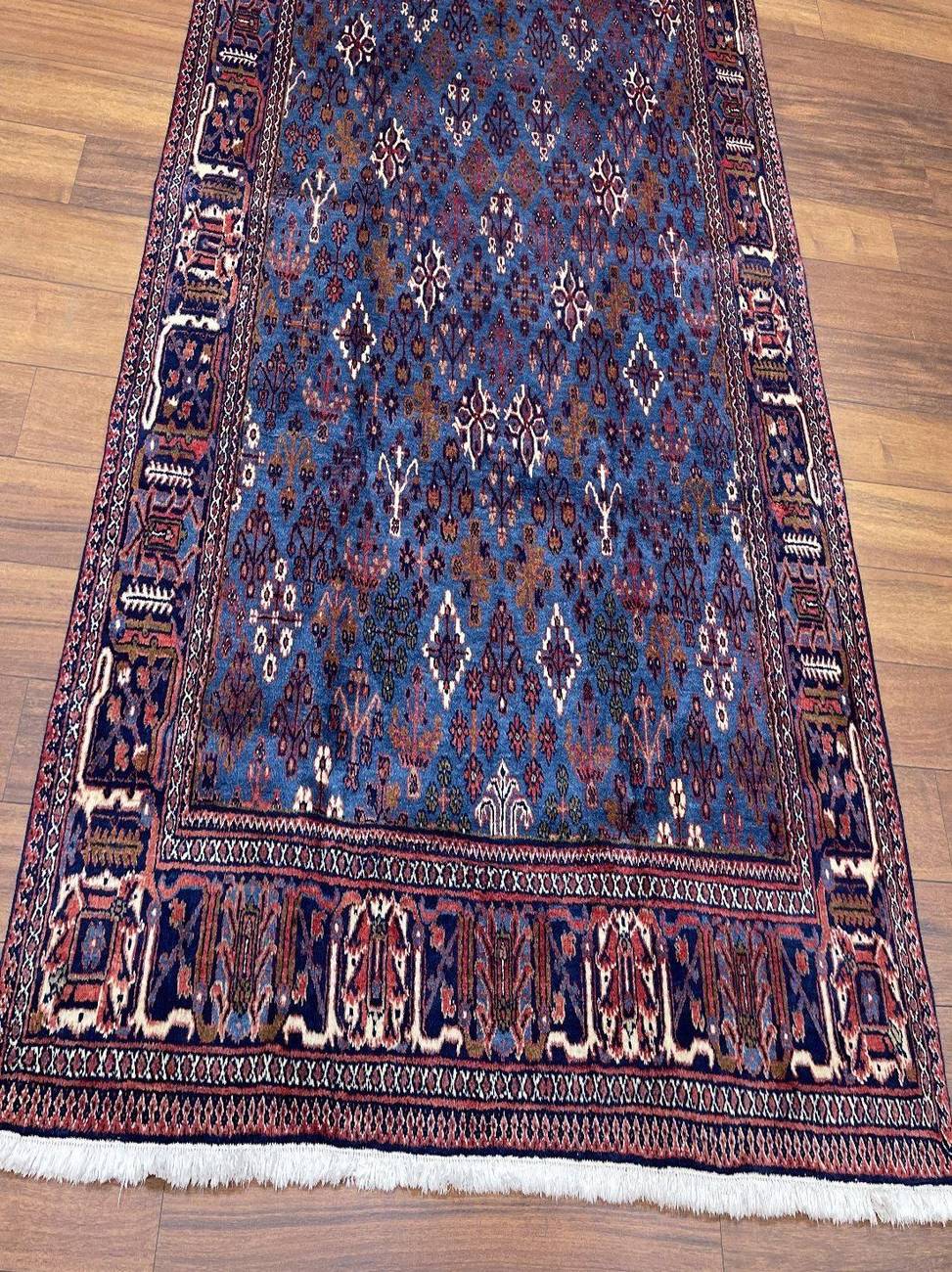
A handmade rug is a long-term object. Many of the pieces we sell have already lived in one or two homes, and with reasonable care they will outlast the room you first place them in. That permanence is exactly why it helps to slow down and choose well, rather than buy the first pattern that catches your eye.
Here is the way we walk customers through it.
Start with size, not pattern
Most regret comes from size, not design. Measure your space first, then look. For a living room, a good starting point is a rug large enough for the front legs of your main seating to rest on it; this visually ties the furniture together. Our rug size guide for living rooms covers the exact dimensions to look for. For a dining room, the rug should extend far enough that chairs stay on it even when pulled out.
Write down the largest rug your room can take and the smallest you would accept. Shopping inside that range removes most of the difficulty.
Let the room set the palette
A rug can either anchor a room or accent it. If your walls, sofa, and floor are quiet, a rug with a strong field and clear border can become the centerpiece. If the room is already busy, a calmer, more tonal piece will sit more comfortably.
Look at the dominant color of the field and the main border separately. Both will be present in the room every day.
Understand material before knot count
Material affects how a rug feels, wears, and ages more than any single number. Wool pile is durable, slightly springy, and forgiving in busy rooms. Silk is finer and more lustrous but better suited to low-traffic spaces. Many handmade rugs use a cotton or wool foundation under a wool pile. For a fuller comparison, see wool vs silk rugs.
Knot count is often quoted as a measure of quality, but it is only meaningful within the same weaving tradition. A coarser tribal rug is not “worse” than a fine city rug; they are made for different purposes.
Read age and condition honestly
Rugs are usually described as new, vintage, semi-antique, or antique. Older does not automatically mean better or more valuable. What matters is condition relative to age: even pile, sound edges and ends, and no hidden repairs you were not told about.
Ask direct questions. A good seller will tell you what they know, and say plainly when they do not know something.
Questions worth asking before you buy
- What is the origin and approximate age, and how confident are you about it?
- What is the pile and foundation material?
- Are there any repairs, stains, or areas of wear?
- Can I see the back, the ends, and the fringes in clear photos?
- What are the exact dimensions in both centimetres and feet?
When in doubt, ask for guidance
If you are unsure, describe your room and tell us your size, colors, and budget. We would rather prepare a small, suitable selection than have you guess. You can also browse what’s currently available. Choosing a handmade rug should feel calm and clear, not pressured.
Frequently asked questions
What size rug should I choose?
Is a higher knot count always better?
Does an older rug mean a better rug?
Should I choose wool or silk?
What should I ask before buying a handmade rug?
Personal Selection
Looking for a piece like this?
Tell us your room size, colors, and budget, and we'll prepare a small selection from the gallery.
Request a SelectionKeep reading
More from the Journal
Handmade vs Machine-Made Rugs: How to Tell the Difference
The back of the rug, the fringes, the knots, and small irregularities all reveal how a rug was made. Here is how to read them.
Read Buying AdviceWhat Makes a Handmade Rug Valuable?
Knot density, materials, age, condition, origin, and design all shape a handmade rug's value. Here is how to weigh them without falling for myths.
Read Istanbul & StoriesBuying a Handmade Rug in Istanbul
Istanbul has long been a meeting point for rugs from across the East. Here is how to buy well here — in person or from abroad.
Read