

Buying Advice
What Makes a Handmade Rug Valuable?
Knot density, materials, age, condition, origin, and design all shape a handmade rug's value. Here is how to weigh them without falling for myths.
June 19, 2026 · 6 min read · Palmyra Oriental
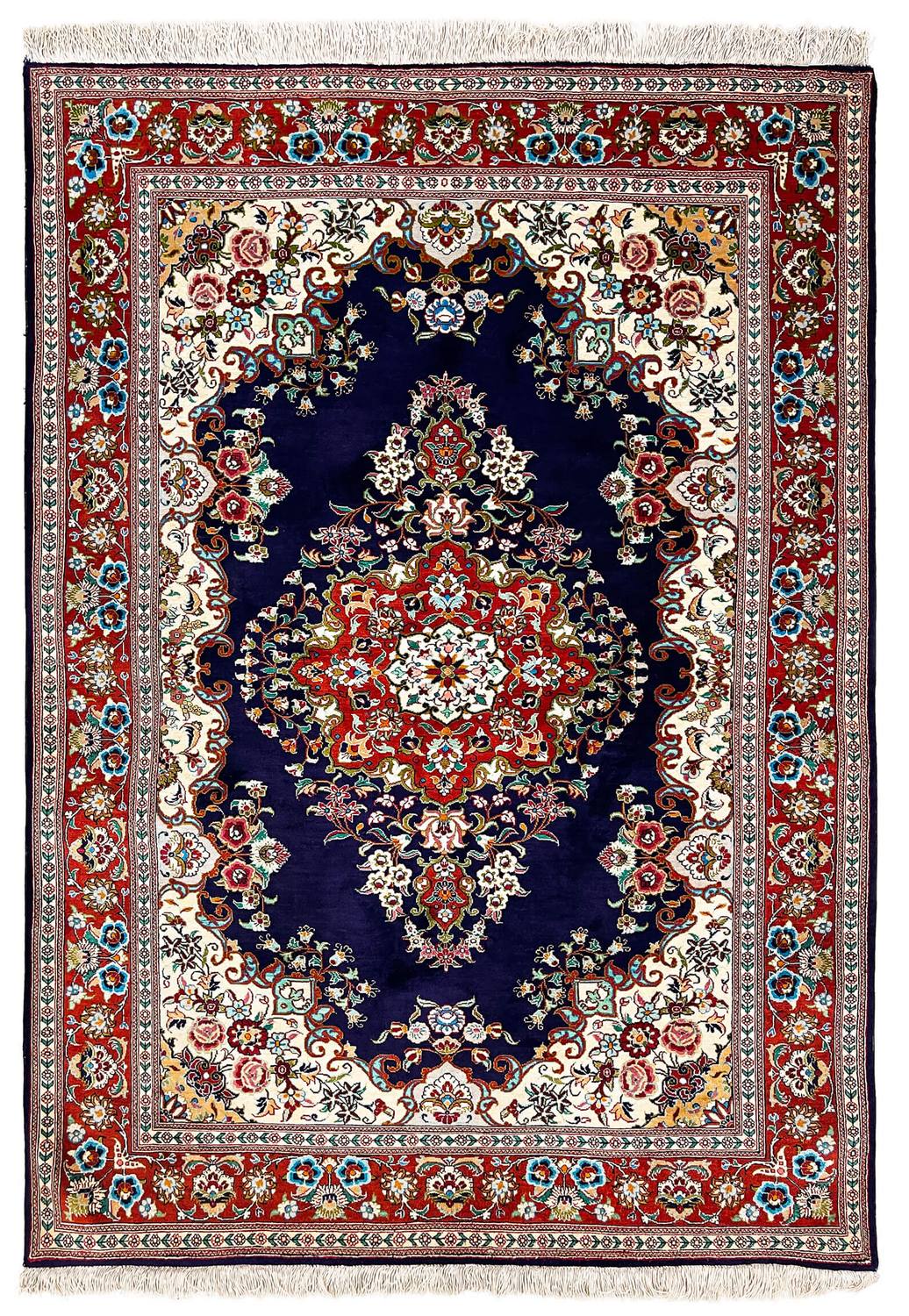
People often ask what makes one handmade rug worth more than another. There is no single answer, and anyone who gives you one is oversimplifying. Value comes from several factors working together, and the most important one is often the simplest: condition. Here is how to think about it clearly.
Materials
The fiber is a foundation of value. Fine wool, hand-spun yarn, silk, and natural dyes generally cost more to produce and age more gracefully than coarse wool or synthetic dyes. A wool-and-silk rug, or one using vegetable-dyed wool, usually sits higher in value than a plain commercial piece. For more on this, see wool vs silk rugs.
Knot density and craftsmanship
Finer weaving takes far more time and skill, so higher knot density can raise value, but only within the same tradition. A finely knotted city rug and a coarser tribal rug are made for different purposes. A tribal rug is not “worth less” simply because it has fewer knots; its value lies in its character, materials, and condition. Judge craftsmanship by how evenly and confidently a rug is woven, not by a single number.
Age and rarity
Rugs are described as new, vintage, semi-antique, or antique. Age can add value when a piece is genuinely old, well preserved, and representative of a respected weaving tradition. But age alone does not create value. A worn, heavily repaired old rug can be worth less than a sound newer one. Rarity, an unusual design, a discontinued regional style, matters most when it meets good condition.
Condition
Condition is frequently the deciding factor. Even pile, intact edges and ends, original fringes, and the absence of hidden repairs all support value. Damage, uneven wear, moth issues, or undisclosed restoration all reduce it. This is why we describe condition honestly and show the back, ends, and any flaws in clear photos. To learn how to read these signs yourself, see handmade vs machine-made rugs.
Origin and design
Certain weaving regions carry strong reputations, and a well-drawn, balanced design is more desirable than a crowded or poorly proportioned one. Origin should be described carefully and never exaggerated. A confident, accurate attribution is itself part of a piece’s value, because you know what you are buying.
Myths worth ignoring
- “Older always means more valuable.” It doesn’t; condition relative to age matters more.
- “Higher knot count always means better.” Only within the same tradition and purpose.
- “A certificate guarantees high value.” Documentation supports trust, but the rug still has to stand on its own.
How we approach value
We would rather under-claim than over-claim. We tell you the materials, the approximate age and origin as far as we can stand behind them, and the true condition. If you’re weighing a specific piece or comparing options, browse the shop or request a personal selection and we’ll give you a straight assessment.
Frequently asked questions
What makes a handmade rug valuable?
Are older rugs always more valuable?
Does a higher knot count mean a more valuable rug?
How much does condition affect a rug's value?
Does a certificate make a rug more valuable?
Personal Selection
Looking for a piece like this?
Tell us your room size, colors, and budget, and we'll prepare a small selection from the gallery.
Request a SelectionKeep reading
More from the Journal
Handmade vs Machine-Made Rugs: How to Tell the Difference
The back of the rug, the fringes, the knots, and small irregularities all reveal how a rug was made. Here is how to read them.
Read Buying AdviceHow to Choose a Handmade Rug for Your Home
A practical guide to choosing a handmade rug by size, origin, material, color, age, and condition — so the piece fits both your space and the way you live.
Read Istanbul & StoriesBuying a Handmade Rug in Istanbul
Istanbul has long been a meeting point for rugs from across the East. Here is how to buy well here — in person or from abroad.
Read