

Origins & Types
Persian vs Turkish Rugs: What's the Difference?
Persian and Turkish rugs differ in knots, designs, colors, and feel. Here is how to tell them apart and choose the right one for your home.
June 5, 2026 · 6 min read · Palmyra Oriental
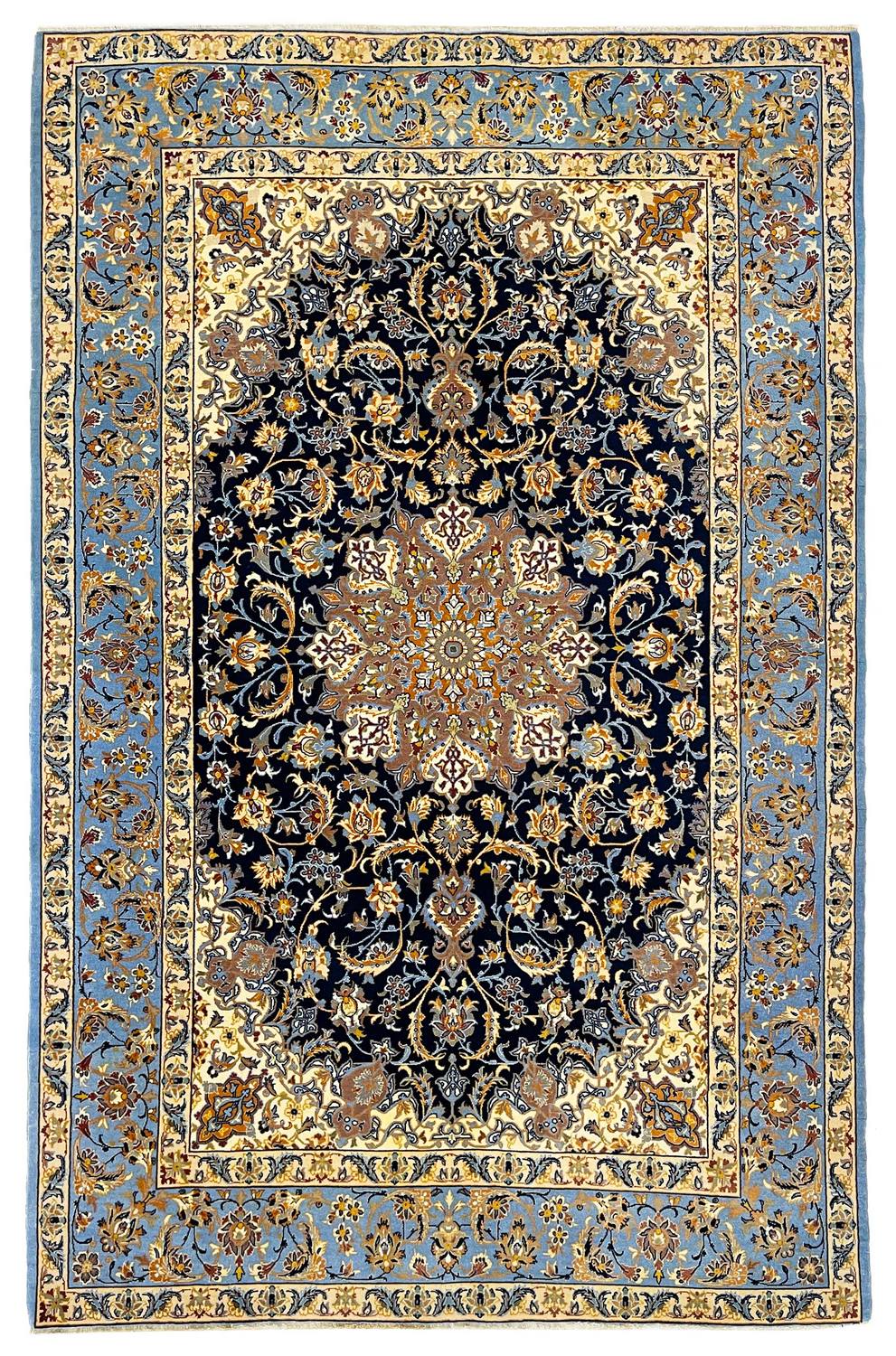
Persian and Turkish rugs are the two great traditions of handmade weaving, and they are often confused. Both are knotted by hand, both can last for generations, and both appear across the same homes and showrooms. But they grew from different regions, and the differences show up in the knot, the design, and the overall feel of the piece.
Here is a clear, honest comparison to help you tell them apart and decide which suits your space.
The knot is the technical difference
The most fundamental difference is the knot. Persian rugs are usually woven with the asymmetrical knot (often called the Senneh knot), which allows very fine detail and flowing, curved designs. Turkish rugs traditionally use the symmetrical knot (the Ghiordes knot), which is strong and well suited to bold, geometric patterns.
You don’t need to count knots to enjoy a rug. But the knot helps explain why the two traditions tend to look different: one leans toward intricate curves, the other toward structured geometry.
Design and pattern
Persian rugs are known for elaborate central medallions, flowing floral fields, and motifs tied to specific weaving towns such as Tabriz, Kashan, Isfahan, and Kerman. Many designs are curvilinear and densely detailed.
Turkish rugs more often feature geometric forms, stylized medallions, prayer-niche designs, and village or tribal motifs. Oushak rugs are a well-known exception with softer, more open floral patterns. As a rule of thumb, strong geometry leans Turkish, and flowing floral detail leans Persian, though there is plenty of overlap.
Color and palette
Persian rugs frequently use deep reds, indigo blues, ivory, and rich jewel tones. Turkish rugs span a wide range, from the soft, faded apricot and gold palettes of Oushak weaving to bolder village colors. Color comes from the dyes and the region, so it is a helpful clue rather than a strict rule.
Material and feel
Both traditions use wool pile most commonly, often on a cotton or wool foundation. Finer Persian city rugs may use silk or a wool-and-silk mix for extra luster. If you want to understand how material changes the way a rug feels and wears, our guide on wool vs silk rugs goes deeper.
Which one is right for you?
Neither tradition is “better.” The right choice depends on your room and taste:
- For flowing, detailed, classic elegance, look toward Persian rugs.
- For bold geometry or soft, faded Oushak tones, look toward Turkish rugs.
If a rug’s pile is even, its edges and ends are sound, and the design speaks to you, it will serve you well regardless of origin. For more on judging a piece overall, see how to choose a handmade rug.
A note on honesty
Origin should be described, not exaggerated. We tell you what we know about a piece and say so plainly when something is uncertain. If you’d like help comparing specific rugs, tell us your room size, colors, and budget and we’ll prepare a small, suitable selection.
Frequently asked questions
What is the main difference between Persian and Turkish rugs?
How can I tell if a rug is Persian or Turkish?
Are Persian rugs better than Turkish rugs?
Which is more valuable, a Persian or a Turkish rug?
What materials are used in Persian and Turkish rugs?
Personal Selection
Looking for a piece like this?
Tell us your room size, colors, and budget, and we'll prepare a small selection from the gallery.
Request a SelectionKeep reading
More from the Journal
What Is a Kilim?
Kilims are flatwoven rugs without a knotted pile. Here is what makes them distinct, where they come from, and how to use them at home.
Read Istanbul & StoriesBuying a Handmade Rug in Istanbul
Istanbul has long been a meeting point for rugs from across the East. Here is how to buy well here — in person or from abroad.
Read CareCaring for a Handmade Rug
Simple, gentle habits that keep a handmade rug beautiful for decades: vacuuming, rotating, sunlight, spills, and storage.
Read